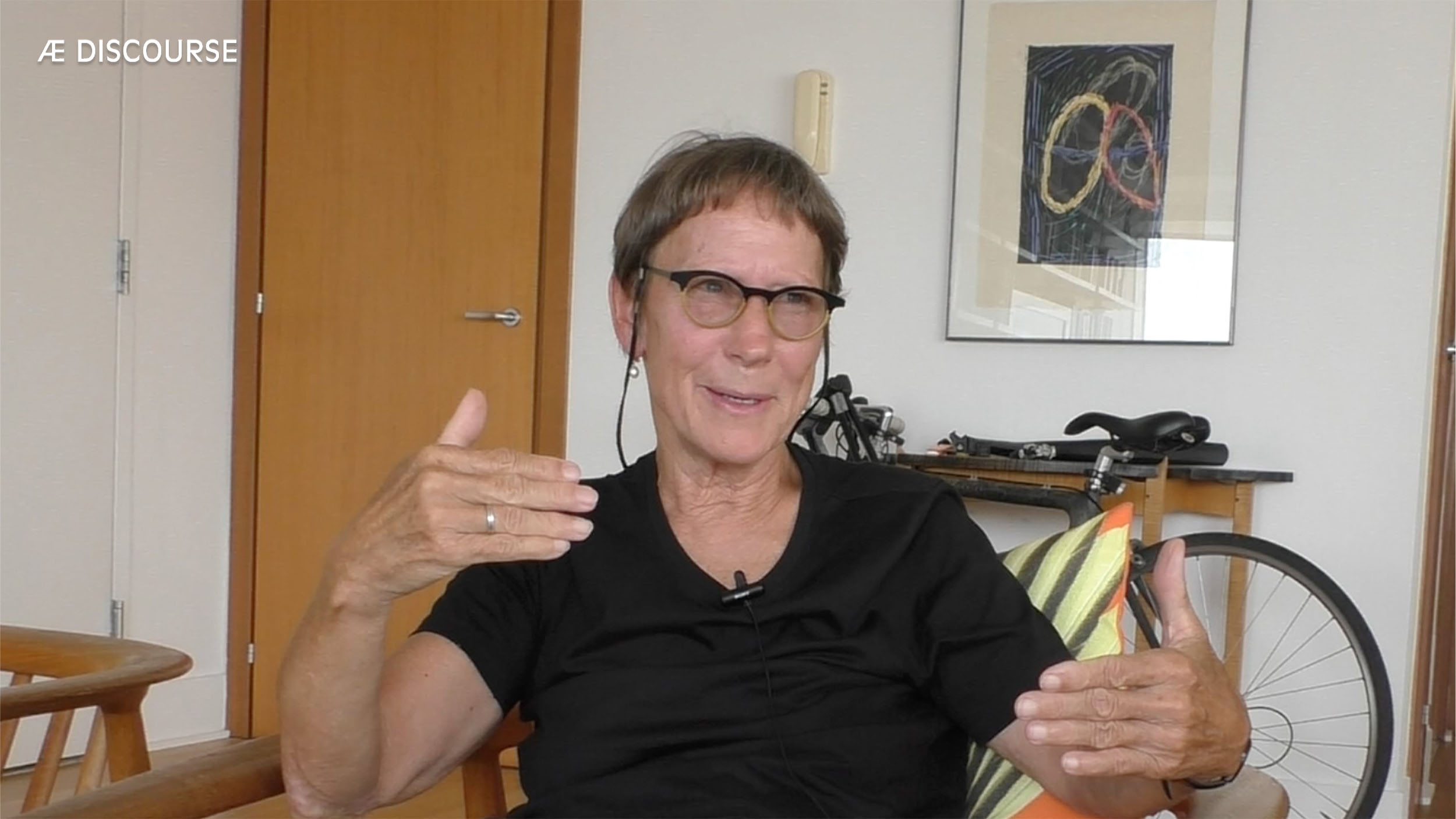
Ana Miljacki
Biographical interview
SUMMARY
In this interview, Ana Miljacki discussed her path into architecture through research and discourse. Growing up in Yugoslavia, she encountered architecture through her family and attended a specialized architectural high school that provided practical technical training. She later moved to the United States to study at Bennington College, where an experimental liberal arts environment brought together design, philosophy, and emerging technologies.
Financial aid influenced her decision to attend Rice University for graduate study, where she encountered architectural theory, critical urbanism, and poststructuralist thinkers including Gilles Deleuze, Michel Foucault, and Roland Barthes. She later entered the Harvard GSD when its intellectual environment was strongly shaped by K. Michael Hays. There, Miljacki developed her research on Eastern European modernism and socialism, which has remained central to her work. Her experiences in Yugoslavia and the United States prompted questions about collectivism and equality while gradually shifting her architectural interests toward history. She concluded by emphasizing the continuing importance of historical research within architecture.
Financial aid influenced her decision to attend Rice University for graduate study, where she encountered architectural theory, critical urbanism, and poststructuralist thinkers including Gilles Deleuze, Michel Foucault, and Roland Barthes. She later entered the Harvard GSD when its intellectual environment was strongly shaped by K. Michael Hays. There, Miljacki developed her research on Eastern European modernism and socialism, which has remained central to her work. Her experiences in Yugoslavia and the United States prompted questions about collectivism and equality while gradually shifting her architectural interests toward history. She concluded by emphasizing the continuing importance of historical research within architecture.
BIOGRAPHY
Ana Miljacki is a critic, curator and Professor of Architecture at Massachusetts Institute of Technology, where she teaches history, theory and design. She has previously taught studios and seminars at Columbia University, City College in New York and Harvard University Graduate School of Design. She holds a Ph.D. (2007) in history and theory of architecture from Harvard University, an M.Arch. from Rice University and a B.A. from Bennington College.
CATALOGUE
INDEX
No tags assigned to this post.