Bernard Tschumi
Biographical interview
SUMMARY
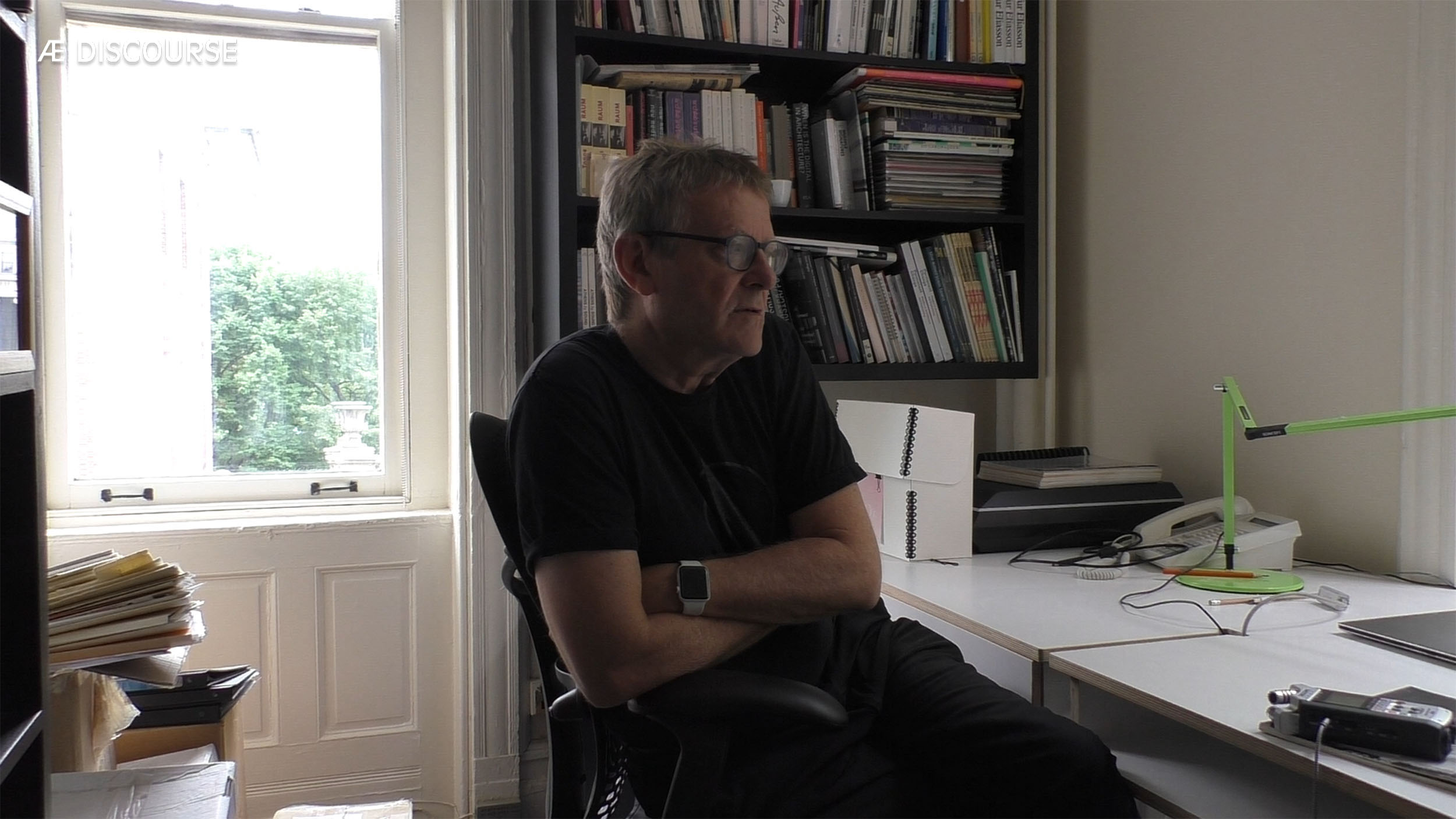
This interview traces Bernard Tschumi’s intellectual formation and the development of his approach to architecture. He discusses coming of age amid the cultural and political questioning of the 1960s, his technically rigorous education at ETH Zurich, and his early fascination with cities. His work with Candilis-Josic-Woods in Paris and experience of May 1968 connected architecture to urban conflict, everyday life, and the ideas of Henri Lefebvre and the Situationists.
Tschumi then reflects on teaching at the Architectural Association, where Cedric Price, unit culture, conceptual art, and public juries helped him move from political and critical analysis toward architectural invention. After moving to New York, his engagement with the downtown art scene informed experiments with words, images, events, and notation in projects such as The Manhattan Transcripts. The interview concludes with the Parc de la Villette competition and his collaborations with Jacques Derrida and Peter Eisenman. Throughout, Tschumi emphasizes that philosophy served as an intellectual ally rather than a set of ideas translated directly into architecture.
Tschumi then reflects on teaching at the Architectural Association, where Cedric Price, unit culture, conceptual art, and public juries helped him move from political and critical analysis toward architectural invention. After moving to New York, his engagement with the downtown art scene informed experiments with words, images, events, and notation in projects such as The Manhattan Transcripts. The interview concludes with the Parc de la Villette competition and his collaborations with Jacques Derrida and Peter Eisenman. Throughout, Tschumi emphasizes that philosophy served as an intellectual ally rather than a set of ideas translated directly into architecture.
BIOGRAPHY
Bernard Tschumi is an architect, theorist, and Professor and Dean Emeritus at Columbia GSAPP. He is the founding principal of Bernard Tschumi Architects, and his work explores the relationships among space, event, movement, and program.
CATALOGUE
INDEX
No tags assigned to this post.