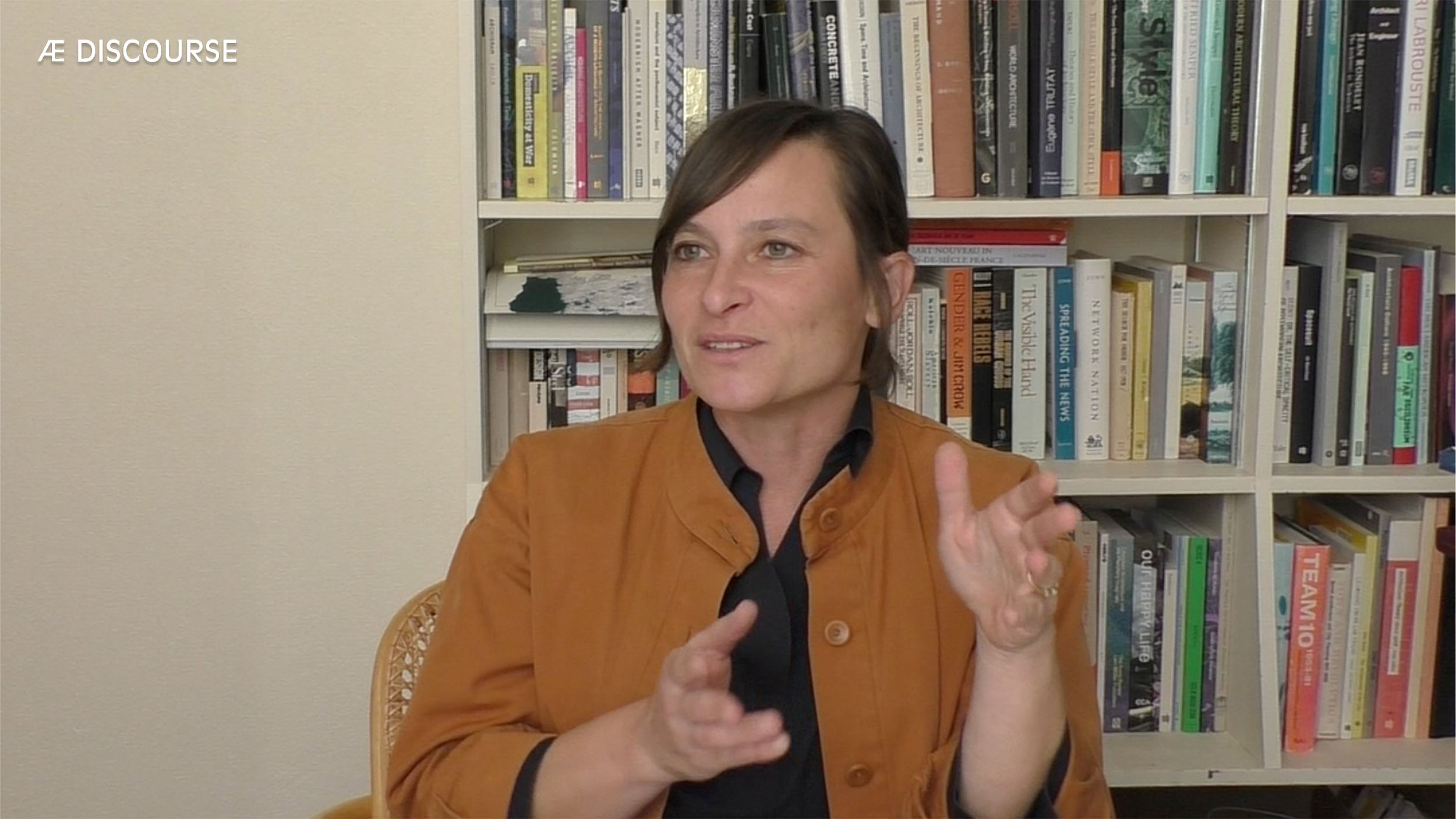
Mabel Wilson
Biographical interview
SUMMARY
In this interview, Mabel O. Wilson discussed her efforts to integrate her cultural experiences into architectural work. At the University of Virginia in the early 1980s, she found the curriculum overly classical, recalling that projects were often reduced to circles or squares.
A semester at the Architectural Association in London in 1984 transformed her understanding of architecture. Experimental teaching and readings of Michel Foucault and Walter Benjamin encouraged students to bring cultural identity into design. Wilson subsequently studied at Columbia, where Bernard Tschumi was introducing an intellectual environment influenced by the AA. She encountered feminist writing with Mary McLeod, Edward Said’s Orientalism with Zeynep Çelik, and the history of redlining through Kenneth Jackson’s Crabgrass Frontier with Robert Bruegmann. These studies informed her work on domesticity, memory, and displacement. Entering NYU’s interdisciplinary Ph.D. program in 1995, she examined race and whiteness through scholars including Lisa Duggan, Michael Omi, Howard Winant, and Robyn Wiegman. Her proposed study of post-1960s Black museums ultimately revealed a longer history of African American cultural representation, leading to The Negro Building (2012).
A semester at the Architectural Association in London in 1984 transformed her understanding of architecture. Experimental teaching and readings of Michel Foucault and Walter Benjamin encouraged students to bring cultural identity into design. Wilson subsequently studied at Columbia, where Bernard Tschumi was introducing an intellectual environment influenced by the AA. She encountered feminist writing with Mary McLeod, Edward Said’s Orientalism with Zeynep Çelik, and the history of redlining through Kenneth Jackson’s Crabgrass Frontier with Robert Bruegmann. These studies informed her work on domesticity, memory, and displacement. Entering NYU’s interdisciplinary Ph.D. program in 1995, she examined race and whiteness through scholars including Lisa Duggan, Michael Omi, Howard Winant, and Robyn Wiegman. Her proposed study of post-1960s Black museums ultimately revealed a longer history of African American cultural representation, leading to The Negro Building (2012).
BIOGRAPHY
Mabel O. Wilson is the Nancy and George Rupp Professor of Architecture, Planning and Preservation, a Professor in African American and African Diasporic Studies, and the Director of the Institute for Research in African American Studies (IRAAS) at Columbia University. Through her transdisciplinary practice Studio &, Wilson makes visible and legible the ways that anti-black racism shapes the built environment along with the ways that blackness creates spaces of imagination, refusal and desire.
CATALOGUE
INDEX
No tags assigned to this post.