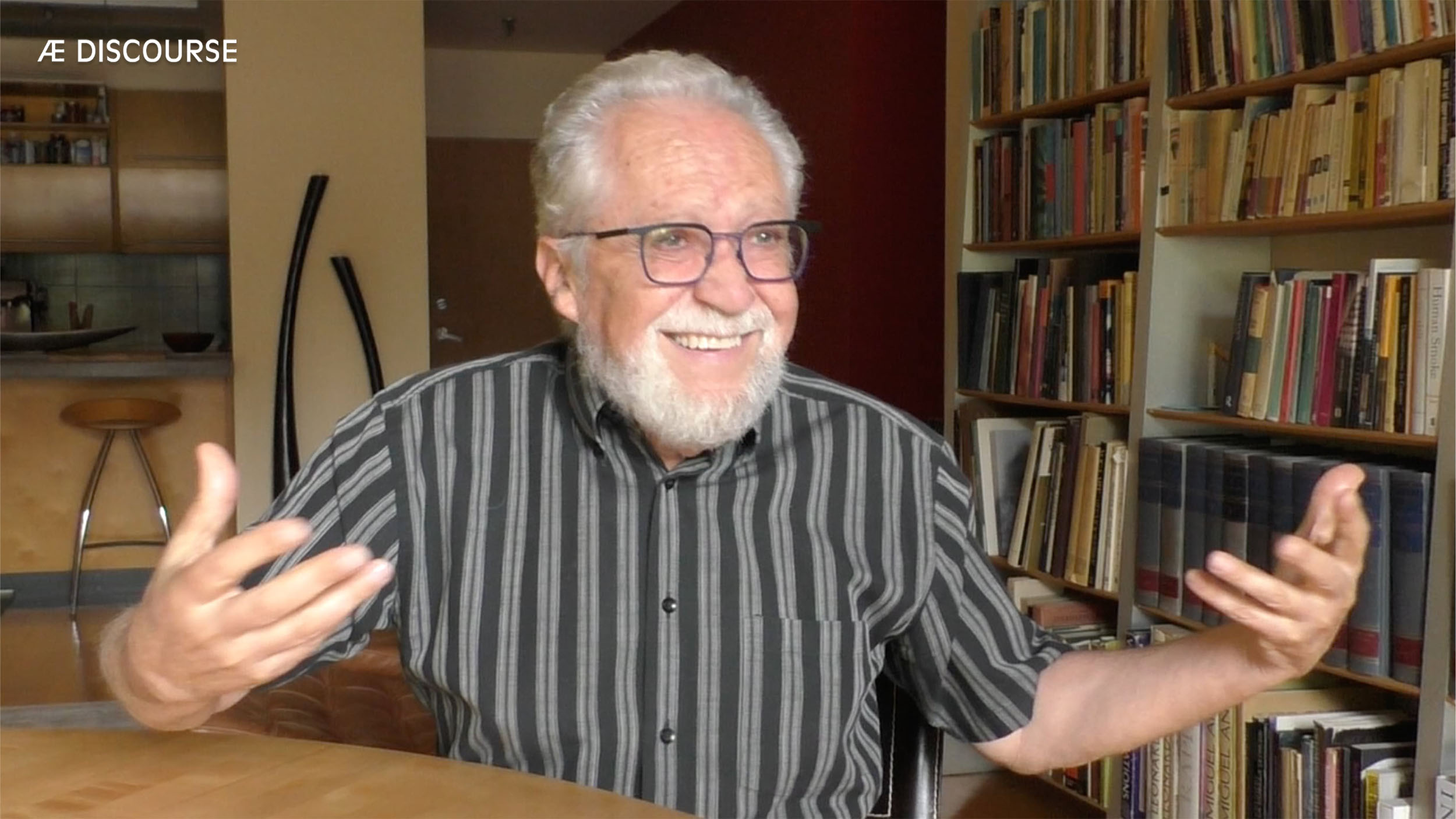
Martin Bressani
Biographical interview
SUMMARY
In this interview, Martin Bressani discussed his education, research, and teaching career. His early interest in architecture developed through his uncle’s modernist house in Quebec City and Le Corbusier’s Vers une architecture. At McGill in the 1970s, he encountered Peter Collins’s Changing Ideals in Modern Architecture (1965) and Manfredo Tafuri’s Theories and History of Architecture (1968), whose critical approach remains influential in his work.
After several years in practice, Bressani pursued graduate study at MIT with Stanford Anderson. His master’s thesis on Auguste Perret’s 25 bis Rue Franklin traced organic analogy and rationalist discourse in 19th-century architecture. In the late 1980s, he began teaching at Carleton under Alberto Pérez-Gómez. Although its intellectual environment was strongly influenced by Cooper Union, Bressani resisted tendencies to abandon the building as architecture’s central object. Returning to McGill in the 1990s, he combined historical research with design studio teaching. During the 2000s, his teaching and writing increasingly explored affect, atmosphere, and fiction.
After several years in practice, Bressani pursued graduate study at MIT with Stanford Anderson. His master’s thesis on Auguste Perret’s 25 bis Rue Franklin traced organic analogy and rationalist discourse in 19th-century architecture. In the late 1980s, he began teaching at Carleton under Alberto Pérez-Gómez. Although its intellectual environment was strongly influenced by Cooper Union, Bressani resisted tendencies to abandon the building as architecture’s central object. Returning to McGill in the 1990s, he combined historical research with design studio teaching. During the 2000s, his teaching and writing increasingly explored affect, atmosphere, and fiction.
BIOGRAPHY
Martin Bressani is William Macdonald Professor at the Peter Guo-hua Fu School of Architecture. He holds a professional architecture degree from McGill University, a Masters degree in the History and Theory of architecture from M.I.T, and a Ph.D. in Art History from the Université de Paris-Sorbonne (Paris IV). He has held visiting professorships at M.I.T, Cornell University, and Syracuse University and was a fellow at the Study Centre of the Canadian Centre for Architecture in 2003.
CATALOGUE
INDEX
No tags assigned to this post.