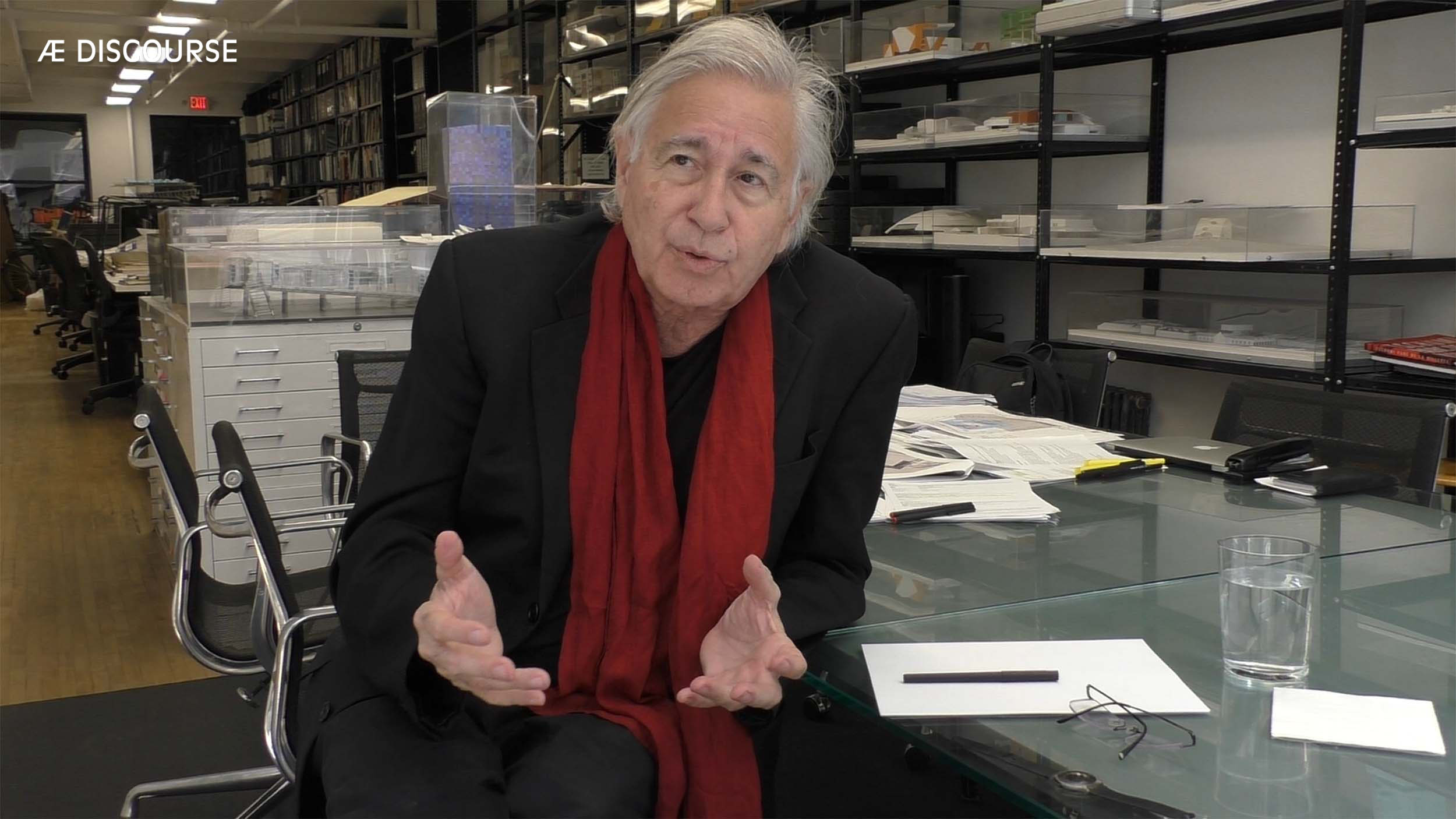
Mark Wigley
Biographical interview
SUMMARY
This interview traces Mark Wigley’s architectural education in New Zealand and his emergence as a theorist in the United States. While pursuing his PhD at the University of Auckland, he encountered Jacques Derrida’s work and recognized its relevance to questions he was already asking about architecture. Rather than applying philosophy to architecture, Wigley became interested in how philosophy depends on architectural concepts it cannot fully control. He describes theory not as a system preceding design but as a form of questioning that disrupts disciplinary assumptions.
Wigley discusses his work with Peter Eisenman, his teaching at Princeton and Columbia, and the 1988 Deconstructivist Architecture exhibition at the Museum of Modern Art. He emphasizes that the exhibition was a historical provocation rather than an attempt to establish a style or translate deconstruction into architectural form. Reflecting on the rise of architectural theory, he presents it as a period of disciplinary self-analysis that opened architecture to questions of media, violence, sexuality, gender, and identity while encouraging more rigorous historical and archival scholarship.
BIOGRAPHY
Mark Wigley is Professor of Architecture and Dean Emeritus at Columbia GSAPP. A historian, theorist, and curator, his work examines architecture’s relationships with philosophy, media, technology, art, and cultural history.
CATALOGUE
INDEX