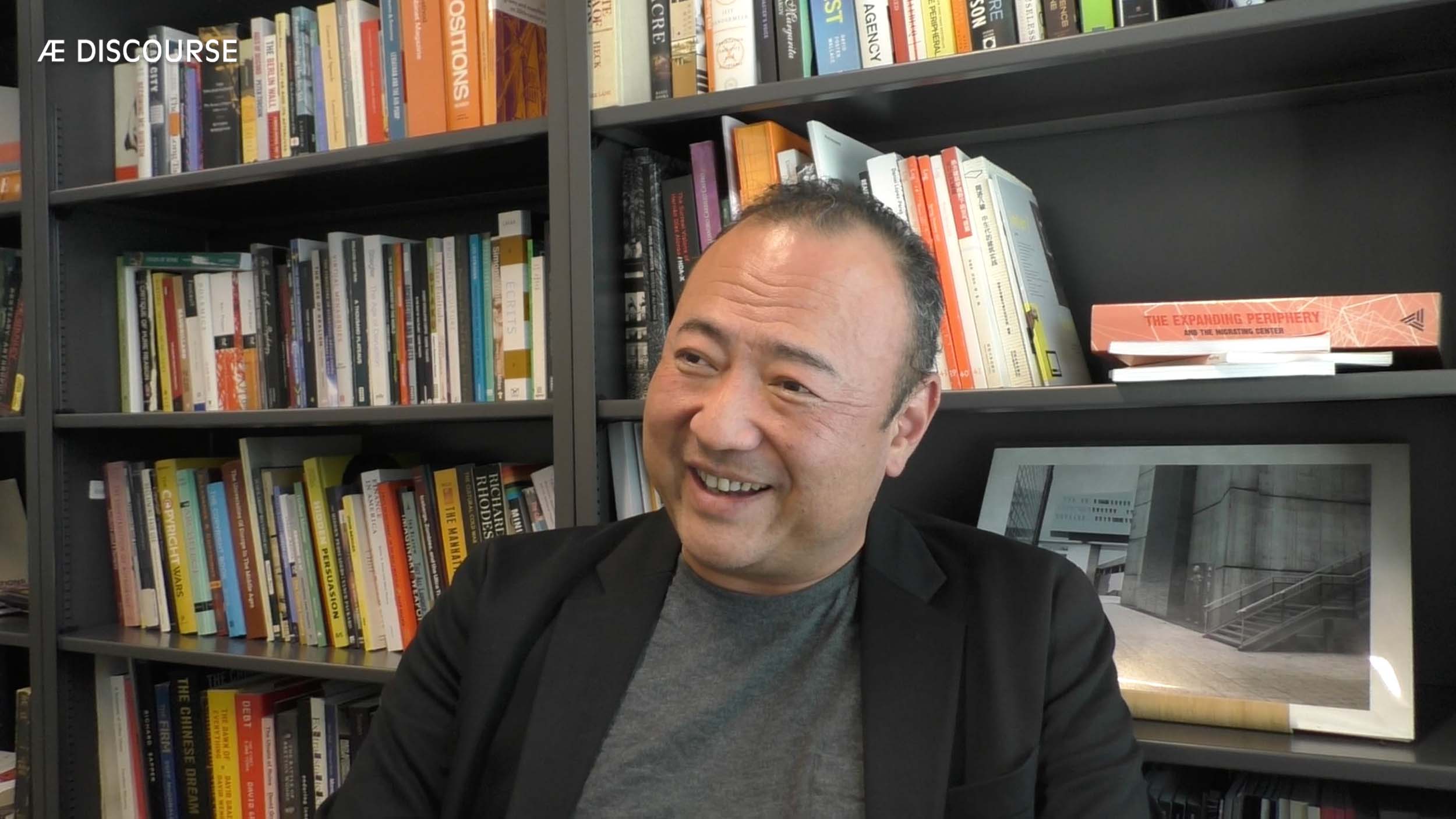
Wes Jones
Biographical interview
SUMMARY
In this interview, Wes Jones reflected on a career connected to avant-garde U.S. architectural discourse yet marked by an independent position. In the mid-1980s, he worked with Peter Eisenman as a teaching assistant and on the Wexner Center, later editing a special issue of ANY and contributing a weekly cartoon. Yet Jones resisted successive fashions, from the digital avant-garde and Deleuzian diagrams to projective discourses of affect and sensation, instead developing a consistent body of projects and theory.
Central to his thinking is the argument that industrial technology’s mechanical scale has shaped everyday life since the mid-19th century. Combined with U.S. traditions of pragmatism, self-reliance, and garage-based tinkering, it has produced an overlooked mechanical vernacular. Jones argued that the avant-garde’s pursuit of novelty obscures this condition. His projects instead present architecture as a shared, accessible, and pragmatically produced vernacular rather than as singular artistic creations. He has recently devoted increasing attention to teaching and writing while continuing to develop these ideas.
Central to his thinking is the argument that industrial technology’s mechanical scale has shaped everyday life since the mid-19th century. Combined with U.S. traditions of pragmatism, self-reliance, and garage-based tinkering, it has produced an overlooked mechanical vernacular. Jones argued that the avant-garde’s pursuit of novelty obscures this condition. His projects instead present architecture as a shared, accessible, and pragmatically produced vernacular rather than as singular artistic creations. He has recently devoted increasing attention to teaching and writing while continuing to develop these ideas.
BIOGRAPHY
Wes Jones is a partner in Jones, Partners: Architecture, a California-based architectural practice founded in 1993. His technologically inspired designs for completed buildings and theoretical projects have received acclaim for their critical engagement with the contemporary cultural scene and their disciplinary sophistication.
CATALOGUE
INDEX
No tags assigned to this post.