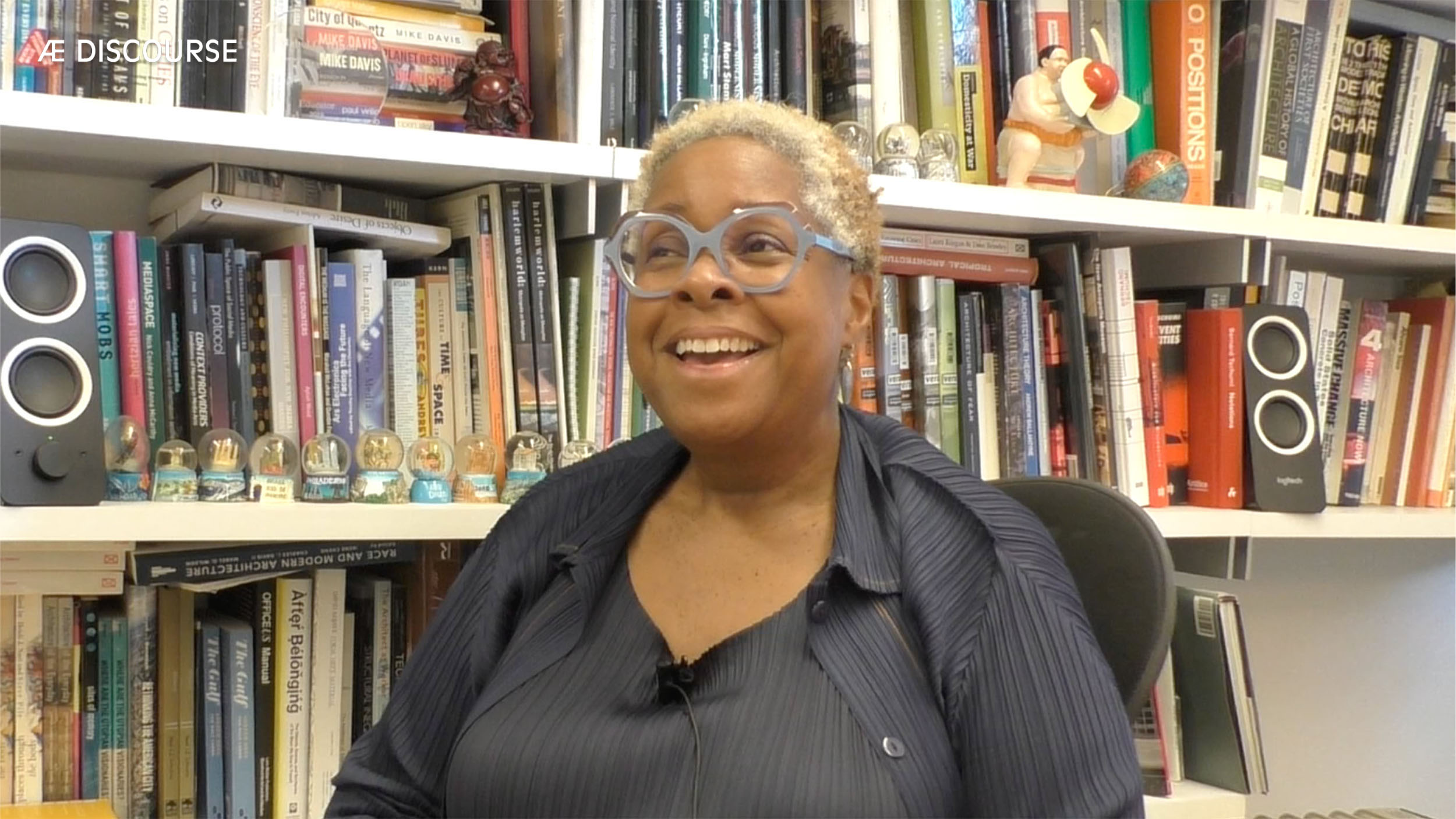
Anna Neimark
Biographical interview
SUMMARY
In this interview, Anna Neimark traced her path through architecture and the historical research that has shaped her work. Born in Moscow in 1980 to parents with strong academic backgrounds, she immigrated to the United States with her family in the early 1990s after periods in Germany and France. At Princeton, she studied with Detlef Mertins, George Dodds, and Edward Eigen. Her thesis, “Ideal Monsters,” examined Leonardo da Vinci’s Vitruvian Man. Working with Eigen and Anthony Grafton, she explored connections between the histories of science and architecture, an interest she later extended with Antoine Picon through research on water infrastructure.
Neimark worked at OMA in Rotterdam and New York before moving into teaching. At USC, she collaborated with Andrew Atwood and later co-founded First Office, where historical and conceptual research informed their architectural work. At SCI-Arc, her teaching similarly uses history to frame design as both critical and conceptual. As part of a post-digital generation emerging after the 2008 financial crisis, her practice approaches material and representational questions through artistic and cultural references rather than an emphasis on technology.
Neimark worked at OMA in Rotterdam and New York before moving into teaching. At USC, she collaborated with Andrew Atwood and later co-founded First Office, where historical and conceptual research informed their architectural work. At SCI-Arc, her teaching similarly uses history to frame design as both critical and conceptual. As part of a post-digital generation emerging after the 2008 financial crisis, her practice approaches material and representational questions through artistic and cultural references rather than an emphasis on technology.
BIOGRAPHY
Anna Neimark is part of the design faculty at SCI-Arch and is co-founder of First Office, a design studio that focuses on form through a critical engagement with the conventions of architectural drawing. Forthcoming publications include “How to Domesticate a Mountain” in Perspecta, “Abstraction Returns” in Think-Space, and “Zoopol: A Monument to the Animal Kingdom” in Project. Prior to joining the faculty at SCI-Arc, Neimark taught at USC and worked for OMA/AMO in Rotterdam and New York. She holds a BA in Architecture from Princeton and an M.Arch I from Harvard’s Graduate School of Design (GSD).
CATALOGUE
INDEX
No tags assigned to this post.